Chow Chow Africa guides
Adopting an adult Chow Chow
Written
100 years ago - still so very apt today,
Lady Dunbar of Mochrum (UK) - one of the pioneer breeders of the Chow Chow - once commented: "The Chow has many noble qualities,
his heart cannot be taken by storm, but,
once given, it is yours forever..."
Particularly when adopting a semi-adult/adult Chow,should one bear those words in mind.
Most Importantly: You must understand the Chow's character,
as well as have patience and time in the first few months.
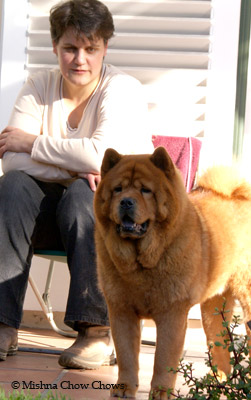
Never underestimate the advantages of the older Chow: be it a rescue chow chow, the retired show dog, or the female that is spayed and not used for breeding, or perhaps the Chow who's owners' circumstances force him/her to find another person to love their pet. Usually these dogs will be available at a lesser outlay because the owner/breeder's main concern is to find the truly excellent permanent home. There are not the same concerns as having to raise a puppy.
Sit down (at the Chow's level), some small distance away from it, not facing it nor having your back turned on it. Do not look it in the eye for more than 1 or 2 seconds at a time. Ignore it if it approaches you. Talk gently in a soothing tone all the time, even if you are carrying on conversation with the owner/care-giver. (Find out what games, snacks, food, toys the dog prefers. Also ask what regular outings/events/grooming it was used to).
If you feel the Chow is comfortable enough - touch it slowly between the forelegs on the chest and work your way up to under the chin. Alternatively, approach it on the cheek. Do not ever approach a Chow from above or behind. Have some tasty bits in your pocket and if the Chow allows petting, offer it a piece. It may not take from you - it still does not know if it can trust you! If it is particularly wary, you dmay have to use this approach a number of times, handling it more as it allows.
If you have other dogs, provided the owner is known, fetch its blanket/favourite toy and put it with your dogs' blankets/toys. In turn, take some of your dogs' blankets or toys and leave it with the Chow to be adopted - just for a couple of days. Dogs work by smell - this allows them to be 'introduced' to one another - accepting that new smell as familiar after a few days. It is also preferable that all dogs are neutered/spayed. This prevents trouble induced by hormones!
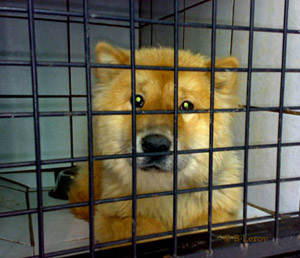
Introduce your own dogs to the Chow one by one, gradually increasing it until all are together after a few days. Always have supervision when the dogs all run together. When you are not present, always seperate them. Do this for at least 4 weeks, or as you feel necessary.
Of course, if there are definite personality clashes, this may take time to resolve, or it may never resolve. Be prepared to split them up for life.Once at your home, initially only one person in the family should feed it. The Chow should be given treats (toy/praise/snack) when it allows contact and shows trust.
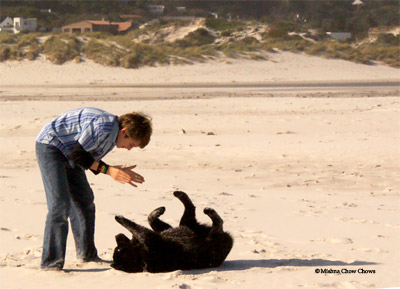
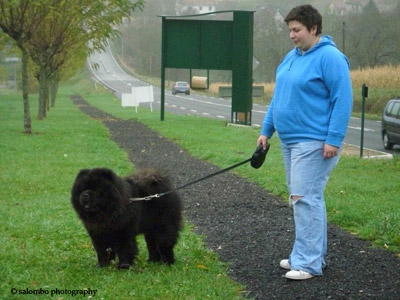
Generally Chow Chows love walks. As soon as enough trust has developed, slip on a lead and walk it around the garden (when dealing with a lead trained Chow). Then progress to walks in the park (if it is comfortable travelling by car) or around your neighbourhood, if it is safe from other dogs. Entice it with games - for a Chow loves to play with its owner, even well into old age!
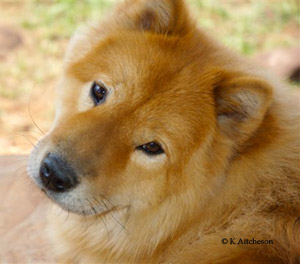
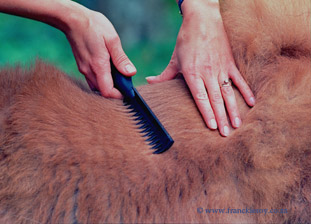
Grooming: Once it accepts you, start brushing it gently on the areas it allows. If it was used to being groomed, find out how it was done (on a table..., on the floor..., how regularly...) If it was not used to brushing, you might be able to train it if you only do it on certain parts when the dog is relaxing. Try make it a relaxing time for the both of you.
You may also have been so very fortunate to find a well raised, bred and socialised Chow, perhaps an ex-show Chow, in which case you may need to apply the above advice in a very limited measure and for a limited time!
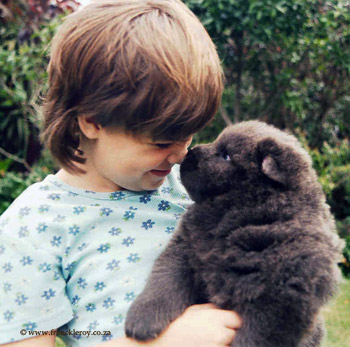
In all instances remember: The Chow Chow is a highly intelligent, dignified dog that thrives on human companionship and friendship - if it is treated as with respect & dignity.
Whilst the above advice cannot be guaranteed to work in all instances, or claim to be the absolutely correct way to handle adoptions in all cases, this advice is all based on the experiences of folks who have adopted semi-adult, adult and middle-aged Chows over the years very successfully. Some have also re-homed Chows very successfully. And eventually the adoptive humans have earned that same undying love from all these Chows!
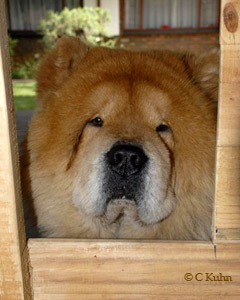
Here is a direct link to the Chow Chow Africa RESCUE ALBUM
(Chow Chows in need of furever homes):
You can view this album even if you are not a member of Facebook.
Unless you are very comfortable with the idea and have had
success before, do
not adopt any AGGRESSIVE dog
Activities for Chows:
More Guides:
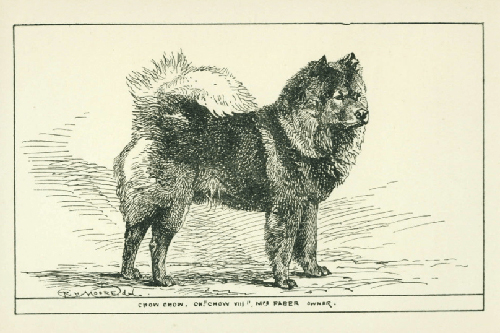 Learn more about the Chow Chow upon which the Breed standard is said to have been based.
Learn about the Chow Chow's rich history on the Chow Chow Archives. This will help you understand the need for functional structure and moderate type.